in reply to Re^6: Beyond Agile: Subsidiarity as a Team and Software Design Principle
in thread Beyond Agile: Subsidiarity as a Team and Software Design Principle
| Replies are listed 'Best First'. | |
|---|---|
|
Re^8: Beyond Agile: Subsidiarity as a Team and Software Design Principle
by einhverfr (Friar) on Jul 22, 2015 at 03:20 UTC | |
But software doesn't exist alone. No piece of software operates in a purely static isolated world. Human requirements change. Technological requirements change. The software you wrote on Windows maybe now has to support Linux. So the software you speak of is an abstraction which has very little real-world meaning. With bounded responsibilities, the team which built the software is likely to have the responsibility of maintaining it after release. The brutal fact of the matter is that we are all in the business of constructing software mechanisms which will be executed by a silicon chip smaller than our pinky fingernail ... and beyond our direct control. But there is no difference in kind to building a hammer. Suppose I make and sell hammers. That will be used for things outside my direct control. In fact, the team that designs and builds these will have *less* control than the software developer has. The control issue is not specific to automation. Also I am not entirely sure that automation should remove the human from the process. There is a lot of research going on right now in things like avionics about how to bring humans back into the process more. And in areas where I work (including financial software), humans need to be in control. So the automation there ends up being less like a robot (something that fully automates tasks) and more like a hammer (something we use to enhance our own working capabilities). | [reply] |
|
Re^8: Beyond Agile: Subsidiarity as a Team and Software Design Principle
by BrowserUk (Patriarch) on Jul 22, 2015 at 04:02 UTC | |
“Because you are building: a machine.” This is, by far, the stupidest thing -- amongst a very long list of very stupid things -- that you've said here. (And repeated ad nauseum.) Bottom line: Software is to hardware as pheromones are to ants. The book may be good -- or not -- but your over-literal interpretation of it is crap. With the rise and rise of 'Social' network sites: 'Computers are making people easier to use everyday'
Examine what is said, not who speaks -- Silence betokens consent -- Love the truth but pardon error.
"Science is about questioning the status quo. Questioning authority".
In the absence of evidence, opinion is indistinguishable from prejudice.
I'm with torvalds on this Agile (and TDD) debunked I told'em LLVM was the way to go. But did they listen!
| [reply] |
by einhverfr (Friar) on Jul 23, 2015 at 01:11 UTC | |
Machines don't make decisions; software does. Define "decision." I don't see a principled line between the sorts of decisions that software can make and those a physical machine can make. Consider for example, the old electromechanical phone switches.... Machines do not adapt to their inputs; software does. Again I am not sure what this means. Maybe it could use more explanation? Machines do not prioritise their responses to inputs; software does. Why not? Certainly I could imagine a machine which would prioritize processing of inputs. Machines have physical limitations; software has only logical limitations. I think I get what you are saying here but I am not sure what relevance it has. Certainly the system running the software has physical limits. So software is a sort of abstraction and being an abstraction allows us to think about it disregarding the limits (I think that's dangerous though). But I think there are also human limits to software and because software is an abstraction we don't tend to talk about those. Bottom line: Software is to hardware as pheromones are to ants.That's actually a good analogy. I like it. But pheramones are subject to physical limits (temperature, air characteristics) etc. right? ;-) | [reply] |
by BrowserUk (Patriarch) on Jul 23, 2015 at 02:34 UTC | |
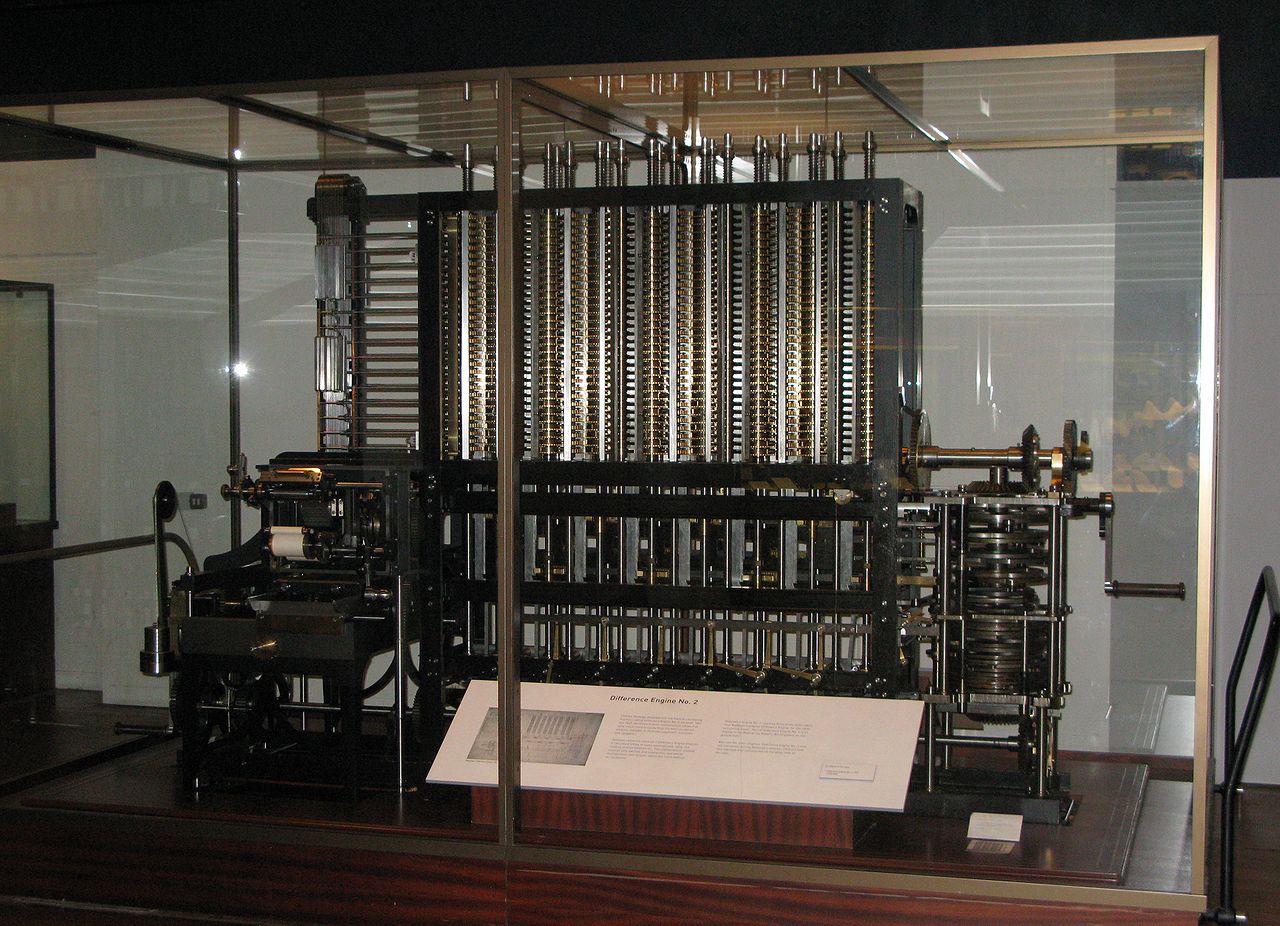
Comparing software to a machine at anything more than a totally superficial level, completely misrepresents the nature and complexity of software. This is a complex machine, but it is roughly equivalent to 10 lines of Perl. With the rise and rise of 'Social' network sites: 'Computers are making people easier to use everyday'
Examine what is said, not who speaks -- Silence betokens consent -- Love the truth but pardon error.
"Science is about questioning the status quo. Questioning authority".
In the absence of evidence, opinion is indistinguishable from prejudice.
I'm with torvalds on this Agile (and TDD) debunked I told'em LLVM was the way to go. But did they listen!
| [reply] [d/l] |
by einhverfr (Friar) on Jul 23, 2015 at 04:36 UTC | |
by BrowserUk (Patriarch) on Jul 23, 2015 at 06:02 UTC | |
| |
|
Re^8: Beyond Agile: Subsidiarity as a Team and Software Design Principle
by Your Mother (Archbishop) on Jul 22, 2015 at 03:51 UTC | |
The | [reply] |